Masonry paint, render, timber and metalwork. On the south coast an exterior is not decoration, it is protection: salt air, driving rain off the Solent and full afternoon sun all pull at a wall. Prepared and coated the right way, an exterior repaint lifts the whole street and keeps the weather out of the building.

Every exterior starts with the wall being cleaned, because masonry paint will not hold on a surface carrying years of green growth and salt. We have the water-fed pole kit for it, so the wash down and the repaint are one job rather than two trades.
Cracks raked out and filled, hollow or blown render cut back and made good, and chalky or powdery walls stabilised with a primer before a top coat goes anywhere near them. Paint does not fix render, it only covers it, so the repairs happen first.
A masonry paint chosen for the wall it is going on. Older solid walls need to breathe, and sealing them with the wrong product traps moisture and pushes it inward. Smooth, textured and pliable coatings all have their place, and you get told which yours needs.
Barge boards, fascias, soffits, timber cladding and window frames sanded back, rot cut out and made good where it is small, knots treated and the whole run primed, undercoated and finished. This is the part that fails first on a south coast house.
Timber sashes and casements, front doors, garage doors, railings, gates and downpipes. Metal rubbed back and given a rust-inhibiting primer rather than a coat of gloss straight over the rust, which is why it keeps coming back on so many houses.
Ladders, towers and scaffold as the job actually needs. Two storey and above usually justifies a tower or scaffold, and it is quicker and safer than stretching off a ladder, which also means the top of the wall gets the same coat as the bottom.
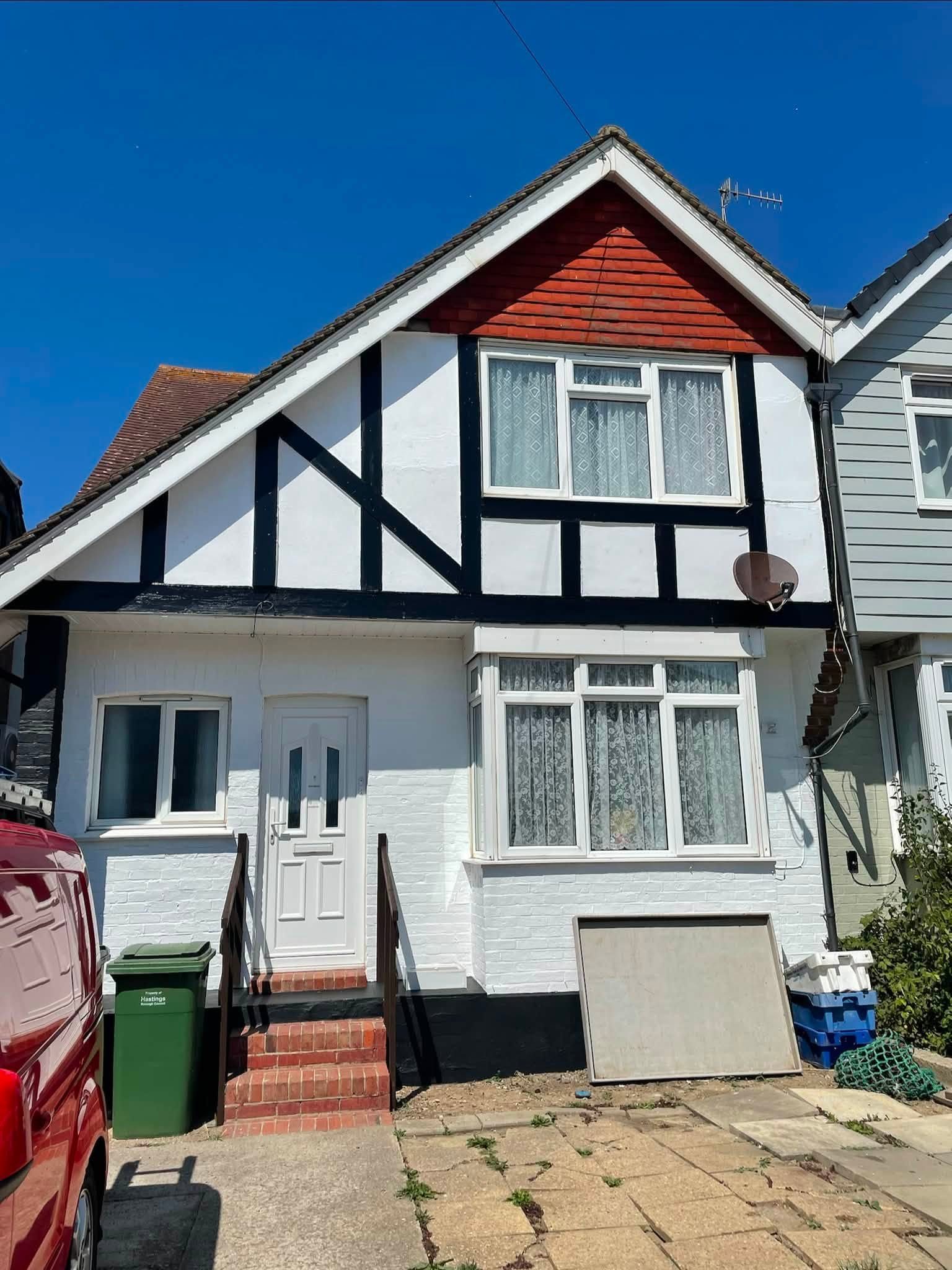
Around Portsmouth, Southsea and Hayling you are realistically looking at five to eight years on masonry and rather less on south and west facing timber, which takes the sun and the salt together. Sheltered elevations can go a decade. The honest answer is that no two elevations of the same house wear at the same rate, and the one facing the sea always goes first.
Yes, and it takes a lot more paint than a smooth wall, which is worth knowing before you compare quotes. A textured masonry coating brushed and rolled into the surface gives far better coverage than spraying it on and is the finish that lasts on pebbledash. Any loose stones get knocked back and made good first.
It depends what kind of cracking. Fine surface crazing is normal and a flexible masonry coating covers it. Cracks you can get a fingernail into, or areas that sound hollow when you tap them, mean the render has failed and painting over it just hides the problem for a year. We tap and check the whole wall and tell you which of the two you have.
Brush and roller for the vast majority of exteriors. Spraying is fast on a big open elevation but on a normal house with windows, neighbours and cars it is more masking than painting, and it does not work the paint into the surface the way rolling does. Where spraying genuinely is the right call, we say so.
Single storey work is generally done off ladders and a tower. Two storeys and above depends on the elevation, the ground and how much timber work there is at high level. Where scaffold is needed it goes in the quote as a separate line so you can see exactly what it costs rather than finding it buried in the price.
Yes, though going from a dark colour to a pale one takes an extra coat and that goes in the price up front. Worth remembering that some parts of Portsmouth, Emsworth and Chichester sit in conservation areas where the colour of the front elevation can be controlled, so it is worth a quick check with the council before you commit to something bold.
Based in Portsmouth and out across Hampshire and West Sussex most days, so a look at your job is rarely more than a couple of days away. If you are not sure whether we reach you, ring and ask.
Send a couple of photos and we will come back with a free, no-obligation quote.